4 Essential Steps to Stop Road Salt Car Damage Buffalo NY
Living in Western New York means dealing with beautiful summers and legendary, snow-packed winters. While the plows keep our streets safe and navigable, the heavy use of sodium chloride creates a silent, corrosive threat to our vehicles. If you want to prevent road salt car damage Buffalo NY, you must understand how salt interacts with your vehicle’s metal components and, more importantly, what actionable steps you can take to stop it in its tracks.
Buffalo drivers know that winter driving takes a toll. But the real enemy isn’t just the snow—it’s the chemical reaction happening underneath your car every time the temperature fluctuates. In this comprehensive guide, we will break down exactly how salt eats away at your investment and how the experts at WNY Car Wash can help you maintain a pristine, rust-free vehicle year-round.
- 1. The Hidden Reality of Road Salt Damage
- 2. How the Corrosion Process Actually Works
- 3. The Undercarriage: Your Car’s Most Vulnerable Zone
- 4. Brake Lines and Exhaust Systems at Risk
- 5. Paint and Clear Coat Degradation
- 6. How to Prevent Road Salt Car Damage Buffalo NY
- 7. Why Professional Washing is the Ultimate Solution
- 8. Frequently Asked Questions (FAQ)
- 9. Call to Action: Protect Your Vehicle Today
The Hidden Reality of Road Salt Damage
When the lake-effect snow hits Erie County, municipalities rely on heavy road salt applications. While excellent for melting ice, this salt is incredibly aggressive on automotive metals. The reality of road salt car damage Buffalo NY is that the decay starts where you cannot see it. By the time rust bubbles appear on your fenders or doors, the structural integrity of your vehicle’s hidden components may already be compromised.
To combat this, local drivers need a proactive approach. Leaving salt on your car for extended periods—especially when parking in a warm, heated garage where melting accelerates the chemical reaction—is a recipe for severe oxidation.
How the Corrosion Process Actually Works
To fully grasp the severity of road salt car damage Buffalo NY, we must look at the science. When road salt (sodium chloride) mixes with water and oxygen, it acts as an electrolyte. This electrolyte speeds up the natural oxidation process of steel and iron.
Moisture from melting snow feeds this chemical reaction. Every time you drive down the I-90 or the 33, salty slush is kicked up into every crevice of your vehicle. If you do not actively neutralize and remove this salt, it sits and slowly dissolves your car’s protective coatings.
The Undercarriage: Your Car’s Most Vulnerable Zone
The most critical area affected by road salt car damage Buffalo NY is the undercarriage. Unlike the painted body panels that receive regular attention, the bottom of your car is completely exposed to slush, ice, and salt.
- Suspension Components: Control arms, struts, and shocks can rust, leading to a bumpy ride and expensive repairs.
- Frame Rust: Severe scaling can eat right through the vehicle’s frame, causing it to fail mandatory New York State safety inspections.
- Fuel Tanks: Metal fuel straps and tanks can degrade, posing a severe safety hazard.
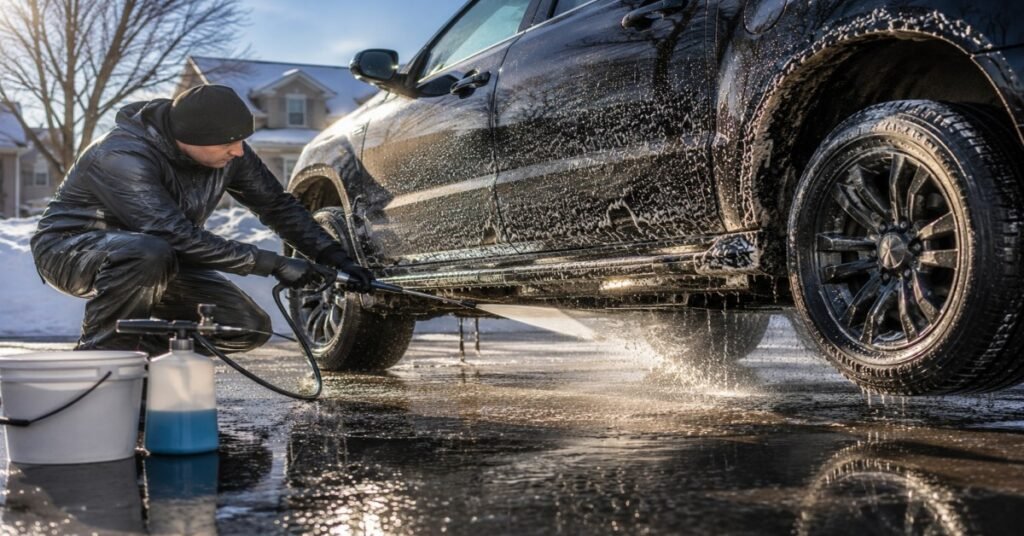
To prevent this, you need a specialized exterior wash that explicitly targets the underside of the vehicle with high-pressure, fresh water.
Brake Lines and Exhaust Systems at Risk
When discussing winter vehicle safety, corrosion should be your number one concern. The salt-laden moisture easily coats your brake lines. Over time, these thin metal tubes can rust entirely through, resulting in a sudden and catastrophic loss of braking power.
Similarly, exhaust systems are subjected to immense heat from the engine and extreme cold from the snow, making the metal expand and contract. This continuous flexing, combined with salt, creates weak points that lead to cracked mufflers and exhaust leaks.
Paint and Clear Coat Degradation
Your car’s exterior aesthetics are also heavily impacted. While modern clear coats are durable, continuous exposure to harsh salt crystals acts like microscopic sandpaper. Avoiding road salt car damage Buffalo NY requires protecting that finish.
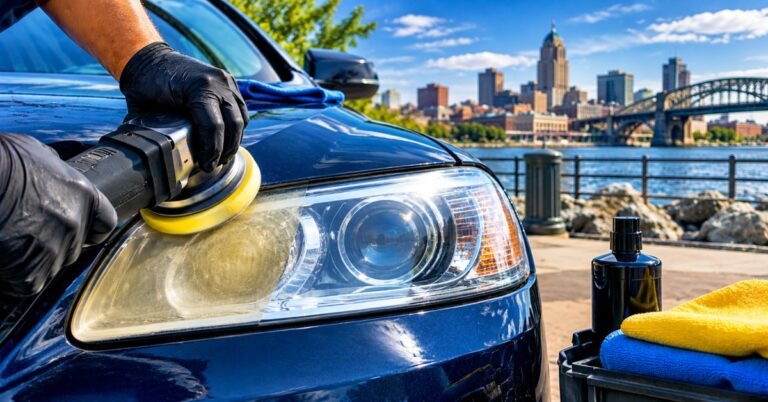
If salt gets trapped under a tiny rock chip, it acts as a catalyst for “spiderweb” rust that crawls beneath the paint. To seal the paint and create a barrier against these harsh elements, regular polishing and waxing is absolutely essential before the first snowfall hits.
How to Prevent Road Salt Car Damage Buffalo NY
Protecting your investment is easier than you think if you follow a consistent routine. Here are the definitive steps to avoiding road salt car damage Buffalo NY:
- Pre-Winter Waxing: Apply a heavy-duty polymer wax or ceramic coating in late fall. This creates a hydrophobic layer that repels salty water.
- Avoid Puddles: Whenever safely possible, avoid driving through deep slush puddles, as they harbor the highest concentrations of salt.
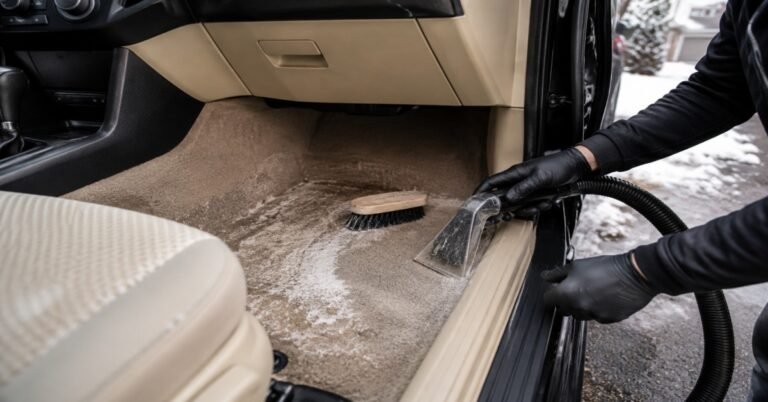
- Use Rubber Floor Mats: Salt tracked into your car can rust the floorboards from the inside out. Protect your interior cabin!
- Wash Your Car Frequently: This is the most crucial step. Aim to wash your vehicle every 10 to 14 days during the winter months, especially when temperatures creep above freezing. For more details on maintaining your vehicle’s shell, check out our guide on exterior car wash and polishing in Buffalo, NY.
To see exactly how much salt is used on our roads, you can review the NYSDOT Snow and Ice Control operations.
Why Professional Washing is the Ultimate Solution
You might be tempted to rinse your car off in the driveway, but freezing temperatures make that nearly impossible (and dangerous). Professional services are the only guaranteed way to stop road salt car damage Buffalo NY.
At WNY Car Wash, we use heated water and specialized undercarriage blasters to dissolve stubborn, caked-on salt. We also apply rust inhibitors that neutralize the harsh chemicals found on Buffalo roads.
Our advanced cleaning solutions get into the wheel wells, behind the bumpers, and deep into the suspension where a standard garden hose simply cannot reach. By utilizing a professional wash, you are extending the lifespan of your vehicle and maintaining its resale value.
Frequently Asked Questions
How long does it take for road salt to damage a car?
Salt can begin causing corrosion within just a few days if moisture is present. The chemical reaction accelerates when you drive on salted roads and then park in a warm garage, as the melting snow feeds the oxidation process.
Should I wash my car in the winter?
Yes, washing your car regularly is your first line of defense against rust. You should aim to wash your vehicle every 10 to 14 days during the winter months to remove salt buildup. It is best to wait for a day when temperatures rise above freezing.
Does road salt damage car paint?
Yes. While modern clear coats offer strong protection, prolonged exposure to road salt can wear down that protective layer. Once compromised, the salt can reach the base paint layer and eventually the metal, leading to costly rust repairs.
How do I clean road salt off the bottom of my car?
A quick rinse with a garden hose is not enough to thoroughly clean the undercarriage. You need to use a professional car wash that offers specialized undercarriage sprayers or blasters. This ensures the high-pressure water reaches the frame, brake lines, and suspension components where salt loves to hide.
Call to Action: Protect Your Vehicle Today
Do not wait until the rust has already taken hold. The fight against road salt car damage Buffalo NY begins right now.
Are you ready to safeguard your vehicle against the harsh Western New York winter? WNY Car Wash is your trusted local expert for keeping your car clean, safe, and rust-free.
👉 Book Now at wnycarwash.com — Schedule your professional exterior detail and undercarriage flush today.