
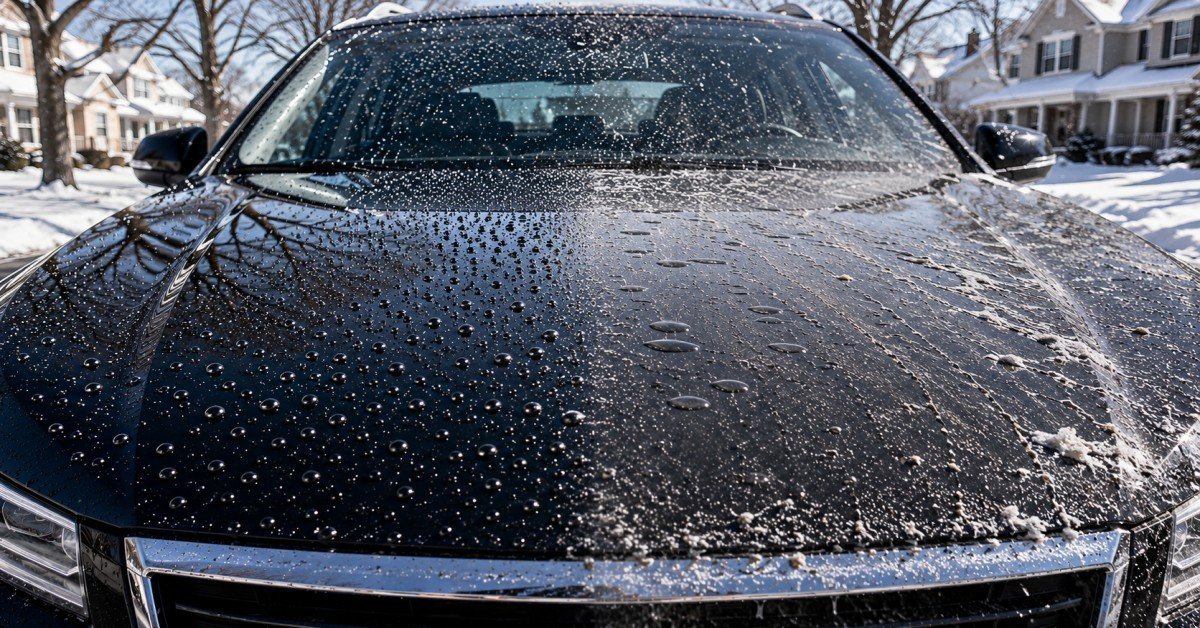
When Western New York winters arrive, Buffalo drivers face heavy road salt, calcium chloride, and freezing slush. Protecting your vehicle’s clear coat is vital to prevent paint oxidation and costly body repairs. When choosing seasonal paint protection, evaluating car wax vs paint sealant WNY performance is essential before snow begins to fall.
In this local guide, we explore car wax vs paint sealant WNY durability, chemical resistance, cost-effectiveness, and application methods. Whether you drive daily on I-90 through Erie County or park outdoors in Williamsville, understanding these differences helps you preserve your vehicle’s finish all winter long.
Table of Contents
- 1. Quick Summary: Car Wax vs Paint Sealant at a Glance
- 2. What Is Car Wax and How Does It Perform?
- 3. What Is Paint Sealant and How Does It Perform?
- 4. Key Differences: Car Wax vs Paint Sealant WNY Winters Demand
- 5. 9 Winter Paint Protection Secrets for WNY Drivers
- 6. How Mobile Detailing Preps Your Paint for WNY Winters
- 7. Maintenance Tips for Winter Paint Protection
- 8. Frequently Asked Questions (FAQ)
Quick Summary: Car Wax vs Paint Sealant at a Glance
For drivers seeking a quick comparison, here is our Western New York winter breakdown:
Analyzing car wax vs paint sealant WNY demonstrates that synthetic paint sealants deliver the multi-month barrier required for Buffalo winters, while natural carnauba wax is ideal for summer conditions.
What Is Car Wax and How Does It Perform?
Natural carnauba wax is harvested from Brazilian palm tree leaves. In professional detailing, car wax is blended with natural oils to produce a warm, deep shine that enhances paint depth, particularly on dark cars.
Pros of Car Wax in Mild Weather
- Deep Warm Glow: Creates rich aesthetic depth on clean clear coats.
- Hydrophobic Water Beading: Repels water efficiently during mild spring rains.
- Fills Micro-Swirls: Temporarily fills microscopic paint scratches.
Cons of Car Wax in WNY Winters
When evaluating seasonal protection under harsh Buffalo winter conditions, natural carnauba wax exhibits distinct limitations. Natural wax has a low melting point and weak chemical bonding structure. Exposed to road salt brines and frequent winter washes, carnauba wax breaks down in 4 to 6 weeks, leaving your vehicle unprotected mid-winter.
What Is Paint Sealant and How Does It Perform?
A paint sealant is an engineered synthetic polymer formula designed to create a strong chemical bond with clear coat. Unlike organic wax, synthetic polymer sealants cross-link across the painted surface, creating a resilient protective shell.
Pros of Paint Sealant for Buffalo Winters
- Long-Lasting Protection: A single application lasts 4 to 6 months through full winter conditions.
- Superior Salt Resistance: Shields paint from road salt, calcium chloride, and industrial fallout.
- Thermal Resilience: Performs reliably in sub-zero freezing temperatures and freeze-thaw cycles.
- Hydrophobic Barrier: Prevents winter slush, snow, and grime from sticking to paint.
Cons of Paint Sealant
- Requires Paint Prep: Demands clean, decontaminated paint for optimal polymer bonding.
- Glassy Reflectivity: Delivers a bright, mirror-like reflection rather than a warm glow.
When comparing car wax vs paint sealant WNY options for seasonal vehicle prep, synthetic sealants offer superior defense against winter elements.
Key Differences: Car Wax vs Paint Sealant WNY Winters Demand
When choosing between natural wax and synthetic sealants for seasonal paint care, surface preparation makes all the difference. Explore our dedicated polishing and waxing options to see how professional paint prep restores clear coat clarity before winter hits.
1. Durability Against Road Salt
WNY road crews apply heavy calcium chloride and liquid road brine. These chemicals strip unprotected paint and accelerate rust on chip-prone body panels. In car wax vs paint sealant WNY testing, carnauba wax degrades after a few salt exposures. Synthetic sealants maintain integrity through multiple wash cycles and months of salt exposure.
2. Resistance to Freezing Temperature Shifts
Buffalo winters bring extreme temperature drops—from mild 40°F rainy afternoons to overnight sub-zero freezes. Carnauba wax shrinks and cracks under freezing conditions, losing surface adhesion. Synthetic sealants remain flexible and firmly bonded. Evaluating car wax vs paint sealant WNY proves polymer sealants offer unbeatable cold-weather durability.
3. Longevity Through Routine Winter Washes
Regular winter washing removes salt buildup, but aggressive car wash soaps strip natural wax quickly. Synthetic sealants withstand repeated washing routines. Reviewing car wax vs paint sealant WNY proves synthetic sealants endure frequent winter washes without losing hydrophobic water-sheeting capabilities.
4. Value and Long-Term Cost-Effectiveness
While natural wax application is slightly cheaper upfront, it requires monthly reapplication—an impractical task in sub-zero Buffalo weather. A single autumn sealant application protects your vehicle straight through spring. Thus, analyzing overall value demonstrates paint sealants provide significantly better financial returns.
9 Winter Paint Protection Secrets for WNY Drivers
To get maximum longevity and protection from your exterior application during Buffalo’s brutal winters, professional detailers rely on these 9 essential secrets:
- Prioritize Polymer Cross-Linking Over Organic Carnauba: Synthetic polymer paint sealants form a dense chemical mesh across clear coats that organic palm waxes cannot replicate.
- Chemically Dissolve Embedded Ferrous Contaminants: Before applying sealant, use an iron-remover spray to dissolve microscopic brake dust particles embedded in clear coats.
- Use a Clay Bar to Ensure Glass-Smooth Bonding: Mechanical clay bar decontamination removes embedded road tar and tree sap, allowing sealants to cross-link directly to paint resin.
- Enforce a 12-to-24 Hour Cure Window: Always allow synthetic sealants to cure in a dry environment for at least 12 hours before exposing the vehicle to moisture or freezing temperatures.
- Layer Carnauba Wax Only After Sealant Cures: For a dual-layer hybrid finish, apply synthetic sealant first as the durable base, cure completely, and then top with carnauba wax for added optical depth in car wax vs paint sealant WNY applications.
- Flush the Undercarriage and Wheel Arches Fortnightly: Road salt spray builds up inside fender lips and underbody frame rails—rinse these areas every 10–14 days to prevent rust.
- Bypass High-pH Touchless Automatic Car Washes: Heavy industrial detergents used at drive-through car washes strip protective coatings rapidly; opt for pH-neutral touchless or hand washing.
- Always Dry Vehicle Clear Coat with Plush Microfiber: Prevent hard water spots and micro-scratching during winter rinses by drying painted panels using thick, high-GSM microfiber towels.
- Schedule Autumn and Spring Bi-Annual Protection Cycles: Apply fresh synthetic paint sealant in late autumn (October/November) for winter defense and early spring (April/May) to strip salt residues and shield against summer UV rays.
How Mobile Detailing Preps Your Paint for WNY Winters
Applying paint sealant in cold Buffalo conditions requires thorough surface decontamination. At WNY Car Wash, our mobile detailing team comes directly to your home or office across Buffalo, Amherst, Cheektowaga, Williamsville, and West Seneca.
Our specialized exterior winter prep includes:
- pH-Neutral Wash: Safely removes loose dirt and road grime without scratching clear coats.
- Chemical Decontamination: Dissolves embedded brake dust and ferrous fallout before sealing.
- Clay Bar Treatment: Pulls out stubborn contaminants to leave paint smooth as glass.
- Polishing & Paint Correction: Restores paint clarity and restores depth. Learn about our specialized exterior car wash and polishing in Buffalo, NY service.
- Synthetic Sealant Application: Seals paint against winter road salt for 6 full months.
If your vehicle requires complete reconditioning inside and out, our mobile team brings expert care right to your driveway.
Maintenance Tips for Winter Paint Protection
Follow these essential rules to maximize your paint sealant longevity:
- Wash Every 10 to 14 Days: Rinse off heavy salt accumulation before brine penetrates paint pores. Check out our comprehensive exterior wash packages to keep your clear coat clean and salt-free all winter long.
- Rinse Underbody: Prevent hidden frame corrosion by washing away trapped salt brines from wheel arches and undercarriage rails.
- Avoid Automated Brush Washes: Abrasive spinning brushes drag dirt across your vehicle, causing severe swirl marks and stripping protection layers.
- Use Soft Microfiber Towels: Always dry your car with clean, plush microfiber towels to prevent surface scratching during cold-weather washes.
- Monitor Weather Alerts: Stay updated on regional severe weather via the NOAA National Weather Service Buffalo to rinse road brine off your car immediately after major snowstorms.
Understanding proper care habits ensures your car remains protected all winter.
Frequently Asked Questions
Is car wax or paint sealant better for Buffalo, NY winters?
In tests comparing car wax vs paint sealant WNY, synthetic paint sealants are far superior. Synthetic sealants last 4 to 6 months against harsh road salt and freezing slush, whereas carnauba wax degrades in 4 to 6 weeks.
How often should I seal my car’s paint in Western New York?
We recommend applying paint sealant twice a year: once in late autumn (October/November) for winter defense, and once in spring (April/May) to prepare for summer driving.
Can paint sealant be applied during winter months?
Paint sealants require temperatures between 50°F and 85°F to cure properly. Our mobile detailing team uses mobile enclosures and climate-controlled setups for year-round application across Western New York.
Does road salt ruin car paint if you don’t wax or seal it before winter?
Yes. Road salt and calcium chloride chemically react with moisture to accelerate clear coat oxidation and paint pitting. Without a protective polymer barrier, salt brine penetrates microscopic paint pores, leading to rust on rock-chipped body panels.
Is paint preparation necessary before applying synthetic paint sealant?
Proper paint preparation is essential for polymer cross-linking. According to guidelines set by professional detailing standards, surface decontamination—including an iron remover treatment and clay bar cleansing—is required so the sealant bonds directly to the paint resin rather than surface dirt. For complete vehicle reconditioning, explore our specialized car detailing in Buffalo, NY services.
Protect Your Car with WNY Car Wash
In the final evaluation of car wax vs paint sealant WNY, synthetic paint sealants are the clear winner for Western New York winters, offering multi-month durability, salt resistance, and long-term convenience.
👉 Don’t let road salt damage your vehicle’s paint this winter! We bring expert paint protection straight to your driveway.
For questions or to discuss your vehicle’s specific detailing needs, our team is ready to help. We are a Buffalo-based business serving Western New York drivers who want professional paint protection without the inconvenience of a traditional detail shop.
Your clean car is closer than you think. Book your mobile exterior detailing with WNY Car Wash today!