
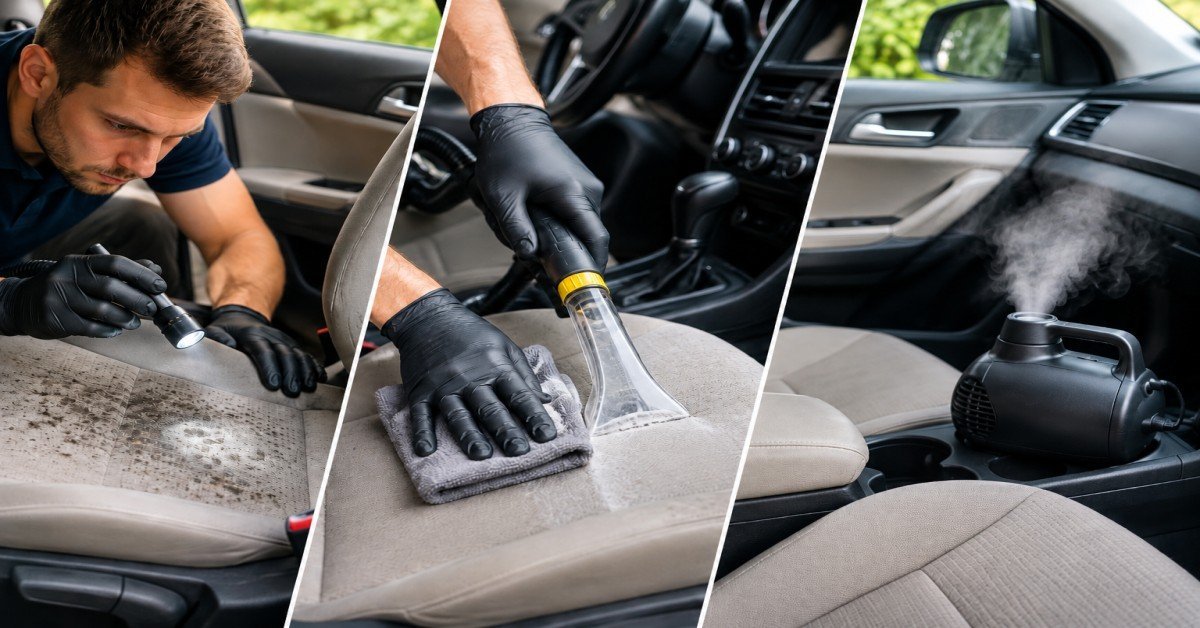
Discovering a damp, musty odor in your vehicle after heavy Lake Erie rainstorms or sudden street flooding is frustrating and hazardous. If you are struggling with a lingering damp stench, knowing how to get mold smell out of car interior fabrics protects your family’s health, preserves vehicle resale value, and restores clean cabin air. Moisture trapped inside automotive carpet padding creates a fertile breeding ground for fungal spores within 24 to 48 hours.
When dealing with a stubborn mold smell car interior Buffalo NY climate conditions often accelerate fungal colonies beneath floor mats, trunk liners, and seat foam. Learning how to get mold smell out of car interior carpets and air conditioning vents requires a systematic remediation approach to neutralize active bacteria rather than masking bad air with synthetic air fresheners.
Table of Contents
- 1. Why Buffalo Weather & Flooding Cause Auto Mold
- 2. Locating Hidden Moisture Pockets in Your Vehicle
- 3. 3 Proven Steps on How to Get Mold Smell Out of Car Interior
- 4. DIY Remediation vs. Professional Auto Detailing
- 5. When to Seek Professional Car Mold Removal in Buffalo, NY
- 6. Preventing Future Car Mildew and Odor Buildup
- 7. Frequently Asked Questions
Why Buffalo Weather & Flooding Cause Auto Mold
Western New York experiences volatile weather shifts ranging from winter lake-effect snow melts to torrential summer downpours. When flash flooding hits South Buffalo, Cheektowaga, Amherst, or Tonawanda, standing street water easily seeps past aged door weatherstripping, blocked sunroof drain tubes, or saturated shoes.
Once moisture enters a sealed vehicle cabin, interior humidity rises quickly. Mastering how to get mold smell out of car interior upholstery becomes an urgent priority because automotive polyurethane foam acts like a dense sponge. According to the United States Environmental Protection Agency (EPA), airborne indoor mold spores thrive in damp conditions and can trigger respiratory irritation, sinus congestion, and chronic allergy flare-ups.
Drivers frequently research how to get mold smell out of car interior floorboards after seasonal storms. Resolving the sour mold smell car interior Buffalo NY motorists experience prevents long-term health hazards, stops floorboard rust, and neutralizes volatile organic compounds before they cause permanent fabric discoloration.
Locating Hidden Moisture Pockets in Your Vehicle
Before applying cleaning agents, you must isolate every wet area. Applying deodorizers over damp padding will never solve the underlying fungal growth permanently. If locating hidden water intrusion points behind door trim panels or deep beneath carpets becomes difficult, professional car detailing in Buffalo, NY provides specialized moisture-mapping tools to pinpoint trapped liquid fast.
- Sub-Floor Carpet & Underlayment: Lift removable floor mats to inspect the underlying factory carpet. Press firmly with a dry microfiber cloth to detect saturated sub-padding.
- Spare Tire Wells & Trunk Corners: Rainwater often flows down rear hatch channels and pools inside trunk wells without driver awareness.
- Under Seat Rails & Cushion Foam: Water trapped beneath power seat tracks and inside lower seat cushions creates deep-seated bacterial growth.
- A/C Evaporator Core & Air Vents: If musty odors spike when you activate your vehicle fan, mildew has formed inside the heating, ventilation, and air conditioning (HVAC) system.
3 Proven Steps on How to Get Mold Smell Out of Car Interior
Applying the proper techniques ensures you treat active spores down to the root. Follow these 3 proven steps on how to get mold smell out of car interior cabins:
Step 1: Deep Water Extraction & Cabin Dehumidification
Thorough water extraction is the first rule of how to get mold smell out of car interior floors. Use a heavy-duty commercial wet/dry shop vacuum with a narrow crevice tool to pull standing water from carpet fibers. Park the vehicle in a dry garage or sunny driveway, lower windows slightly, and run high-velocity air movers or a home dehumidifier inside the cabin for 12 to 24 hours to draw out trapped humidity. Pull up unbolted floor mats and hang them in direct sunlight to sanitize the backing material.
Step 2: Antifungal Disinfection & Odor Neutralization
Distilled white vinegar is a safe, natural acid that eliminates over 80% of common mold species. Mix equal parts distilled white vinegar and warm distilled water in a spray bottle. Lightly mist damp carpet areas. As you practice how to get mold smell out of car interior fabrics, avoid over-saturating the floorboards. Agitate the fibers gently using a medium-bristle detailing brush to reach embedded fungal spores.
Allow the treated carpet to dry for two hours, then generously dust pure baking soda (sodium bicarbonate) across floorboards and upholstery. Baking soda absorbs leftover dampness and neutralizes acidic odors. Let the baking soda dwell overnight (8 to 12 hours), then vacuum thoroughly using a high-efficiency HEPA vacuum. This technique is essential when learning how to get mold smell out of car interior seats without abrasive chemicals.
Step 3: HVAC System Sanitization & Cabin Filter Replacement
Musty air blowing through dashboard vents indicates contaminated air channels. Remove and replace your dirty cabin air filter located behind the glovebox. Spray a specialized automotive antimicrobial foaming duct cleaner directly into the exterior cowl intake vents while running the blower fan on high to flush out dormant spores. Following these steps teaches any driver how to get mold smell out of car interior ventilation ducts with professional-grade results.
DIY Remediation vs. Professional Auto Detailing
For deep vehicle restoration, booking a specialized service for interior car cleaning in Buffalo, NY ensures factory carpets, floor pans, and seat foam are sanitized, extracted, and dried using professional-grade air movers. Car owners dealing with persistent smells can also review our guide on removing smoke smell from car interiors to understand how deep-set volatile odors behave in vehicle fabrics. Knowing how to remediate stubborn vehicle smells helps you decide when home remedies are enough and when industrial extraction is required.
Need Urgent Car Flood Drying & Mold Elimination in Buffalo?
Standing water and trapped moisture cause permanent mildew damage in as little as 24 hours. Our Delaware Avenue detailing team uses commercial air movers, deep thermal steam extractors, and ozone shock treatments to restore your vehicle fast.
When to Seek Professional Car Mold Removal in Buffalo, NY
While DIY methods provide quick relief for minor dampness, severe stormwater intrusion requires commercial equipment. Factory car carpets sit over dense jute insulation and sound-deadening foam. When heavy Buffalo rain saturates floorboards, water seeps into this lower layer where household shop vacuums cannot pull it out.
Professional detailing facilities utilize industrial hot-water extractors, hospital-grade antimicrobial biocide solutions, and medical-grade ozone shock treatments. Ozone gas ($O_3$) floods the sealed vehicle cabin, penetrating headliners, seat foam, and ductwork to oxidize mold cell walls on contact. Similar to our process for removing smoke smell from car interiors, ozone treatments neutralize airborne contaminants at a molecular level rather than temporarily masking them.
If lingering mustiness persists after trying how to get mold smell out of car interior DIY techniques, schedule a complete interior detail at WNY Car Wash on Delaware Avenue. Our detailing specialists locate hidden water intrusion leaks, sanitize HVAC pathways, and eliminate the stubborn mold smell car interior Buffalo NY vehicles develop during wet seasons.
Preventing Future Car Mildew and Odor Buildup
- Install High-Lip All-Weather Floor Mats: Custom rubber liners trap melting winter slush and rainwater before moisture penetrates factory floor carpeting. While protecting your cabin interior, reviewing our guide on ceramic coating vs car wax in Buffalo will help you choose the right exterior shield against harsh Western New York road salt and winter weather.
- Clear Sunroof and Cowl Drains Annually: Leaves, pine needles, and road dirt clog drainage tubes, causing water to back up into the headliner and front footwells.
- Place Desiccant Moisture Absorbers Inside the Cabin: Reusable silica gel packs under front seats absorb ambient moisture during humid Western New York summers.
- Inspect Door & Trunk Weatherstripping: Keep rubber seals clean and conditioned with silicone spray to prevent cracking and water leaks. Proper moisture prevention starts with keeping water outside where it belongs.
Struggling with Stubborn Mold or Mildew Odors in Your Car?
Don’t let hidden mold spores compromise your health or damage your interior. Speak with our Buffalo auto detailing specialists for professional hot-water extraction and medical-grade ozone treatments.
Frequently Asked Questions
How long does it take for mold to grow in a wet car interior?
Mold spores begin multiplying in damp car carpets, cloth seats, and jute padding within 24 to 48 hours in humid temperatures. Fast moisture extraction is critical to prevent mold colony expansion.
Can white vinegar damage car upholstery or leather?
Diluted distilled white vinegar (50/50 ratio with water) is safe for automotive cloth carpets and synthetic fabric. However, avoid spraying vinegar on delicate leather seats or touchscreen infotainment displays, as acidic solutions can degrade protective topcoats.
Why does my vehicle still smell like mildew after drying completely?
If mustiness persists after carpets feel dry to the touch, water has soaked into the thick sub-carpet jute underlayment or seat foam cushions. Dormant spores continue multiplying below the surface, releasing volatile organic compounds into cabin air.
Does an ozone machine permanently eliminate car mold smells?
Yes. Professional ozone shock treatments flood sealed vehicle cabins with active ozone gas (O3), penetrating porous cushions, headliners, and A/C ducts to destroy odor-causing bacteria and mold spores at a molecular level.
Will running the car heater dry out mold and mildew?
Running the standard heater can dry superficial carpet moisture, but without air circulation and moisture extraction, residual warmth acts as an incubator for mold spores trapped in deep foam padding.
How much does professional car mold remediation cost in Buffalo, NY?
Professional car mold removal and deep interior sanitization in the Buffalo metro area typically ranges from $150 to $400 depending on water depth, vehicle size, and whether ozone shock treatment is required.