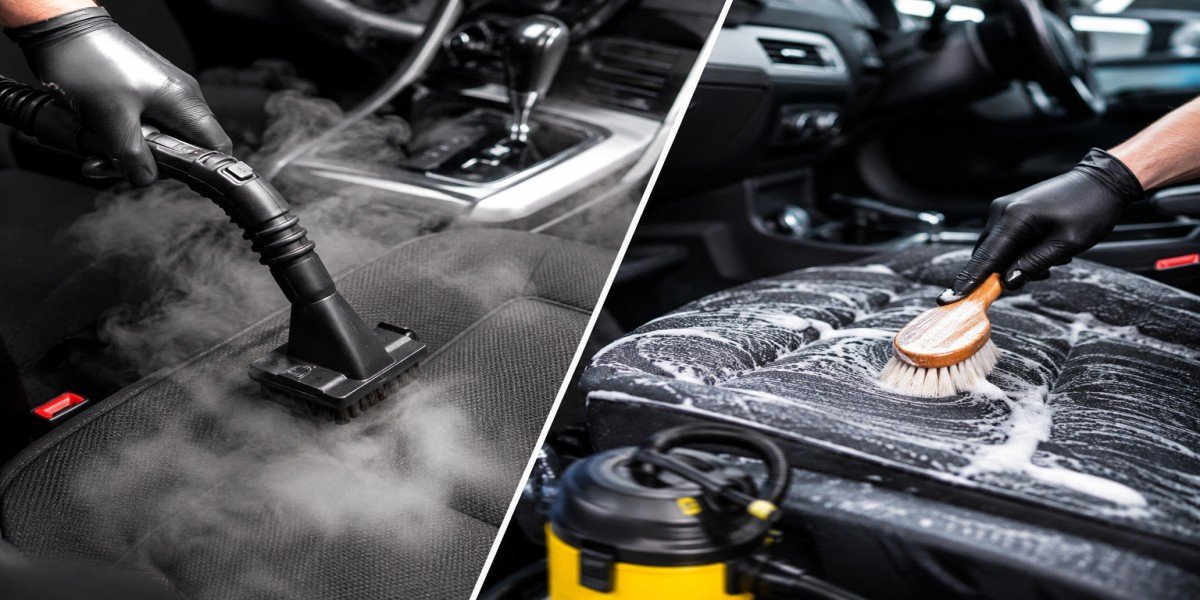
Deciding between steam cleaning vs shampooing car interior fabrics is critical when restoring dirty seats, floor carpets, and door panels. Daily commuting across Western New York, muddy footwear, and heavy lake-effect winter slush leave automotive cabins smelling musty and coated in stubborn calcium chloride. While both detailing methods restore vehicle interiors, they operate on completely different principles of thermal dry vapor versus chemical wet extraction.
Using the wrong method can leave thick seat foam soaked for days or fail to break down hardened road salt deposits. This definitive Buffalo guide compares steam cleaning vs shampooing car interior processes—evaluating dry times, stain removal power, sanitization, and material safety—so you can pick the best treatment for your vehicle.
⚡ Quick Answer: Steam Cleaning vs Shampooing Car Interior
- Choose Steam Cleaning: For routine maintenance, leather, headliners, air vents, winter salt crust removal, and fast drying (30–90 minutes) with zero chemical residue.
- Choose Carpet Shampooing: For deep mud-caked carpets, pet urine, dye transfer, and heavy drink spills requiring wet detergent flush and vacuum extraction (6–12 hour dry time).
- The Best Method: A hybrid approach—shampoo heavy carpet footwells, then steam and sanitize all upholstery, leather, and vents.
Table of Contents
- 1. Steam Cleaning vs Shampooing Car Interior
- 2. Understanding Steam Cleaning for Vehicle Cabins
- 3. Understanding Interior Carpet and Upholstery Shampooing
- 4. Key Differences: Steam Vapor vs Shampoo Extraction
- 5. The Salt and Winter Factor: Western New York Considerations
- 6. Best Practice Guide: Which Detailing Method Do You Need?
- 7. Frequently Asked Questions
- 8. The Final Pro Verdict: Why Hybrid Detailing Wins
Steam Cleaning vs Shampooing Car Interior
| Feature / Metric | Thermal Steam Cleaning | Hot Water Carpet Shampooing |
|---|---|---|
| Primary Mechanism | Pressurized dry vapor (212°F–320°F) | Surfactants, mechanical agitation & wet extraction |
| Average Dry Time | 30 to 90 minutes | 6 to 12+ hours |
| Chemical Requirement | 100% chemical-free (distilled vapor) | Required (detergents, enzyme cleaners, degreasers) |
| Sanitizing Power | High (kills 99.9% of bacteria, mold, viruses) | Moderate (relies on chemical disinfectants) |
| Deep Stain Removal | Superior on grease, oils, candy, and salt | Superior on deep mud, dyes, and heavy drink spills |
| Material Versatility | Leather, plastics, headliners, vents, cup holders | Confined strictly to durable cloth and carpeting |
| Mildew & Odor Risk | Extremely low (rapid surface evaporation) | Moderate to high if seats remain damp in closed cars |
Understanding Steam Cleaning for Vehicle Cabins
Automotive steam cleaning uses pressurized, superheated dry vapor to break surface tension, melt stubborn oils, and sanitize surfaces without oversaturating upholstery.
Commercial detailing steamers boil water past 212°F, producing vapor with less than 5% liquid water content. When directed through specialized detailing nozzles or horsehair brushes, the thermal energy instantly dissolves grease, body oils, and dried drink syrups. For verified sanitization protocols and health safety benchmarks, professional detailers align with the CDC Cleaning and Disinfection Guidelines to eliminate microbial cabin contamination without harsh fumes.
- HVAC Air Vents and Ducts: Superheated vapor penetrates deep into directional louvers, eliminating mold colonies directly at the heater core.
- Leather and Perforated Upholstery: Gentle heat opens natural pores, drawing out trapped body oils without drying out protective topcoats.
- Delicate Fabric Headliners: Heavy liquid dissolves overhead glue and causes headliners to sag. Dry vapor safely cleans roof fabric without saturating the backing board.
- Tight Seams and Electronics Surrounds: Switches, console buttons, cup holders, and seat tracks release years of buildup without moisture bridging electrical connections.
Understanding Interior Carpet and Upholstery Shampooing
Traditional car shampooing relies on specialized surfactants, vigorous mechanical agitation, and commercial hot-water extraction to flush heavy soil out of woven fibers.
Detailers apply a foaming automotive detergent across stained fabrics. They agitate the fibers using high-speed drill brushes to dislodge trapped dirt particles from deep inside the pile. Next, a high-lift extractor injects heated water and immediately suctions the dirty slurry into a waste tank.
- Mud-Packed Footwells: Heavy mud tracked into carpets requires detergents and mechanical agitation to float sand out of the backing pile.
- Deep Dairy and Sugar Spills: When milk, lattes, or sodas soak deep into cloth seat cushions, wet extraction is necessary to draw up deep-seated sugars.
- Heavily Soiled Work Trucks: Commercial vehicles with neglected, ground-in soil benefit from deep surfactant encapsulation and wet flushing.
Key Differences: Steam Vapor vs Shampoo Extraction
To make an informed choice on steam cleaning vs shampooing car interior treatments, examine how both methods perform across critical detailing categories:
- High-volume detergent flush
- Rotary brush agitation
- High-lift wet vacuuming
- 212°F thermal breakdown
- Neutralizes bacteria & mold
- 45-minute rapid drying
1. Stain Removal Capabilities
Evaluating steam cleaning vs shampooing car interior performance depends on the type of stain. Shampooing dominates heavy, water-soluble pigment stains like fruit juices, wine, and muddy slurry. However, dry steam vapor is far superior for dissolving melted wax, chewing gum, tree sap, oil smears, and sticky makeup residues from touchpoints.
2. Drying Times and Mildew Hazards
Drying speed is a massive factor when reviewing steam cleaning vs shampooing car interior options. Steam cleaning leaves upholstery dry within 30 to 90 minutes. In contrast, traditional shampooing saturates foam cushions; without commercial air movers, fabrics remain damp for 6 to 12 hours, creating prime conditions for mildew growth in closed cabins.
3. Sanitization and Cabin Air Quality
When comparing steam cleaning vs shampooing car interior hygiene benefits, superheated vapor wins decisively. High heat destroys dust mites, bacteria, and active fungal spores on contact without chemical sprays. While shampooing washes away surface soil, it cannot match thermal disinfection.
4. Chemical Residue and Rapid Re-Soiling
A hidden pitfall in steam cleaning vs shampooing car interior care is chemical residue. If shampoo formulas are not completely extracted, a sticky detergent film remains on fabric fibers. This invisible layer acts like a magnet, pulling fresh dirt into the seats and causing them to re-soil rapidly. Steam leaves zero chemical film behind.
5. Multi-Surface Material Adaptability
Looking at multi-surface interior adaptability reveals that shampoo is restricted to woven cloth and carpet. Commercial steam sanitizes textured plastics, touchscreens, leather seats, steering wheels, and headliners safely without leaving water spots.
6. Water Conservation and Eco-Friendliness
Traditional hot-water extraction uses 3 to 6 gallons of water per vehicle and creates chemical runoff. Steam units clean an entire cabin using less than 1.5 gallons of distilled water, making dry steam the premier eco-friendly detailing option.
The Salt and Winter Factor: Western New York Considerations
When choosing between steam cleaning vs shampooing car interior methods in Buffalo, local climate conditions dictate the best approach. Western New York winters coat roads in heavy rock salt, gravel, and calcium chloride brine that passengers inevitably drag across footwells and floor pans.
When evaluating winter salt crust remediation, dry thermal vapor is the undisputed winner. Traditional wet carpet shampooing saturates crusty mineral deposits, converting hardened road salt back into liquid brine. This liquid seeps deep into the carpet underlayment and floor foam, only to resurface days later as unsightly, powdery white salt rings that damage automotive subflooring.
Superheated dry steam operates on a completely different chemical principle: temperatures past 212°F instantly dissolve calcium chloride crystal bonds on contact. The mineral slurry is suspended and lifted into clean microfiber towels without flooding the vehicle’s floor pan. For comprehensive seasonal protection, booking professional interior car cleaning in Buffalo, NY ensures certified technicians apply the exact commercial-grade thermal equipment needed to protect your upholstery against harsh lake-effect elements.
Best Practice Guide: Which Detailing Method Do You Need?
- Choose Steam Cleaning If: You drive a vehicle with leather seats, suffer from seasonal allergies, want to sanitize your HVAC vents, need your vehicle ready to drive immediately, or need to eliminate stubborn winter road salt crusts.
- Choose Carpet Shampooing If: Your vehicle has deep, dried mud ground into the carpets, dark spilled coffee on cloth upholstery, or severe dirt tracking from job sites.
- Material Match: If your vehicle has mixed upholstery or sensitive hides, check our guide on car seat shampooing vs leather conditioning service costs to protect your seats without causing moisture damage.
- The Hybrid Detailing Method: Elite detailers combine both systems. Technicians pretreat high-traffic footwells with spot shampooing, extract embedded grit, and finish the entire cabin with superheated steam for complete sanitization and rapid drying.
Frequently Asked Questions
Which is better: steam cleaning or shampooing car interior?
Steam cleaning is better for routine maintenance, leather, headliners, fast dry times, and sanitizing vents. Shampooing is better for heavily mud-caked carpets or deep liquid spills in fabric seats. For best results, top detailers combine both.
Does steam cleaning remove stubborn car interior smells?
Yes. When evaluating steam cleaning vs shampooing car interior odor removal, steam is far more effective. High heat (212°F+) destroys the bacteria causing smoke, milk, and vomit odors at the source rather than temporarily masking them with perfumes.
Can car seat shampooing cause mold in cold climates?
Yes. In cold or humid climates like Buffalo, wet shampooed carpets take up to 24 hours to dry inside a closed vehicle. Excess moisture seeps into subfloor insulation, creating sour mildew odors unless dried with commercial centrifugal air blowers.
How often should I deep clean my vehicle upholstery?
Vehicle interiors should receive a deep clean twice per year: once in late autumn before winter slush arrives, and once in spring to purge accumulated road salt, mud, and seasonal allergens.
The Final Pro Verdict: Why Hybrid Detailing Wins
Our pro verdict on steam cleaning vs shampooing car interior care is clear: Thermal steam cleaning is the superior all-around solution for modern vehicles. It sanitizes, dissolves winter salt crusts, and dries in minutes without leaving soapy chemical residues behind.
However, if your fabric seats suffer from deeply soaked drink spills or thick caked mud, combining targeted shampoo extraction with full-cabin steam vapor produces the ultimate restoration.
Stop living with crusty salt stains, coffee spills, and stale odors. Through our professional mobile car interior cleaning services, the WNY Car Wash team brings commercial dry vapor steam machines and hot-water extractors directly to your doorstep across Western New York.
Ready to Restore Your Car Interior?
Call for instant booking or reserve your slot online. Our mobile detailing team brings commercial dry vapor steam and hot-water extraction straight to your driveway.
📍 Serving All of Western New York:
Buffalo, Amherst, Cheektowaga, Tonawanda, West Seneca, Orchard Park, Clarence, and Williamsville.
✨ Guaranteed Results:
Certified technicians, eco-safe cleaning agents, zero sticky residue, and rapid dry times.