How to Remove Salt Stains Car Carpet: Best Steps in Buffalo NY
Driving across Western New York during winter means battling heavy snow, slush, and an aggressive layer of corrosive road chemicals. If you want to remove salt stains car carpet flooring traps during freezing weather, taking prompt action protects your vehicle’s value and cabin health. Between rock salt, calcium chloride brine, and slush tracked across Buffalo, Amherst, and Cheektowaga, car floors face severe chemical wear from November through April.
Left unaddressed, chalky white stains do far more than look unsightly. Abrasive salt crystals bind tightly to carpet pile, weaken backing adhesives, and pull ambient humidity downward toward bare floorboards. Over time, that dampness creates sour odors, carpet rot, and floor pan corrosion.
Whether you need to revive stiff factory floor mats or eliminate stubborn white rings around your pedals, this guide explains how to safely remove salt stains car carpet underlayment collects. Learn practical cleaning steps, avoid damaging DIY mistakes, and discover when professional heated extraction offers the safest permanent fix.
Quick Answer: How to Remove Salt Stains Car Carpet
To quickly remove salt stains car carpet fibers absorb during a Buffalo winter:
- 1. Dry Vacuum First: Pull out all dry sand, loose salt crystals, and winter gravel with a high-power shop vacuum.
- 2. Apply a 1:1 Vinegar Solution: Mist a balanced mixture of warm distilled water and 5% white vinegar over the crust to dissolve mineral bonds.
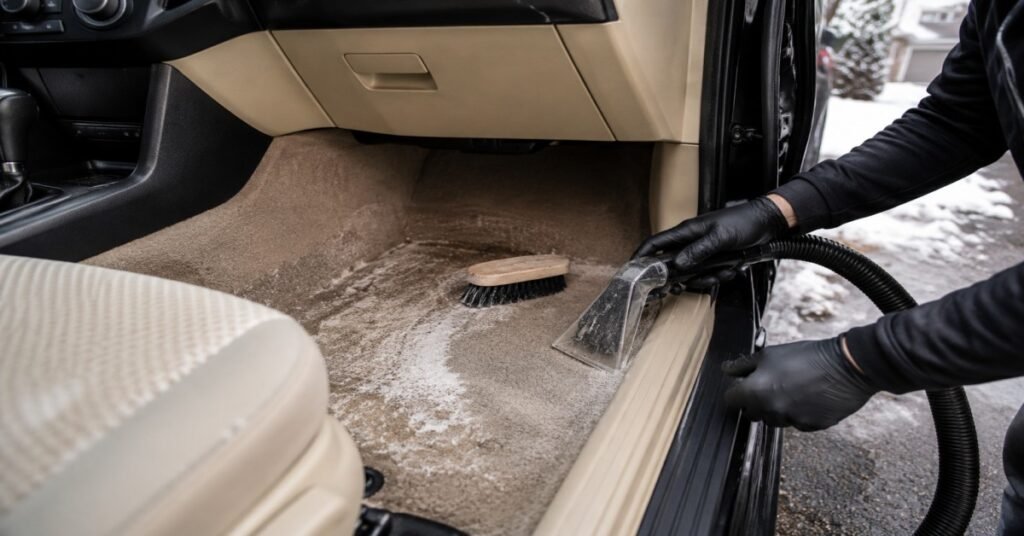
- 3. Agitate Lightly: Work the cleaning solution into fibers using a medium-stiff nylon bristle detailing brush.
- 4. Extract Dissolved Brine: Press a wet/dry vacuum nozzle firmly against the carpet to suck out suspended liquid.
- 5. Dry Completely: Ventilate the cabin thoroughly with open windows or directional floor fans to stop mold growth.
Table of Contents
- 1. The Science of Winter Road Brine and Carpet Wear
- 2. Essential Supplies for Interior Salt Extraction
- 3. 5 Steps to Remove Salt Stains Car Carpet Backing Traps
- 4. Cleaning All-Weather Rubber Liners vs. Carpet Mats
- 5. Costly DIY Mistakes That Damage Vehicle Floors
- 6. When to Choose Professional Steam Extraction in Buffalo, NY
- 7. Frequently Asked Questions
- 8. Book Your Detail with WNY Car Wash
The Science of Winter Road Brine and Carpet Wear
To properly remove salt stains car carpet fabrics collect, you must understand the chemistry of modern de-icers. Highway crews apply coarse rock salt, liquid magnesium chloride, and calcium chloride. These de-icing chemicals lower freezing points, creating a sticky brine engineered to grip cold asphalt.
When slush clings to boots, it transfers inside your vehicle. In a heated cabin, snow melts into liquid brine that penetrates the open-cell foam padding beneath your floorboards. As moisture evaporates, minerals recrystallize into sharp formations that lock around synthetic fibers.
Research from SAE International demonstrates that road de-icers exhibit hygroscopic properties, pulling moisture continuously from interior air. When you fail to remove salt stains car carpet padding conceals, trapped dampness accelerates floor pan rust and foul interior odor.
Essential Supplies for Interior Salt Extraction
Before treating winter mineral buildup, gather supplies that dissolve road de-icing bonds safely:
Essential Supplies for Interior Salt Extraction
- 5% Distilled White Vinegar: Contains mild acetic acid to neutralize alkaline winter salt deposits safely.
- Warm Distilled Water: Prevents tap water minerals from interfering with the chemical neutralizing process.
- Chemical-Resistant Spray Bottle: Delivers a controlled spray without soaking vehicle carpets.
- Nylon Detailing Brush: Lifts dried salt crust gently without damaging carpet loops.
- Wet/Dry Shop Vacuum: Essential to pull suspended liquid brine out of deep floor padding.
- Plush Microfiber Towels: Blot dissolved minerals and track soil transfer.
5 Steps to Remove Salt Stains Car Carpet Backing Traps
Follow these five practical steps to dissolve winter minerals without saturating vehicle floorboards:
Step 1: Remove Mats and Dry Vacuum
Take all removable floor mats out of the cabin. Before applying liquids, run a shop vacuum over the floor. Tap the carpet gently with your hand or a rubber mallet to fracture hard salt crust and dislodge grit. Removing loose debris dry ensures you do not grind dirt deeper into carpet pile while scrubbing.
Step 2: Formulate the Dissolving Mixture
Combine equal volumes of warm distilled water and 5% distilled white vinegar in your spray bottle. Acetic acid converts stubborn calcium and sodium chloride deposits into water-soluble acetates. If trapped seasonal dampness has created foul odors, eliminating trapped moisture prevents the lingering mold smell car interior Buffalo NY motorists encounter following wet winter thaws.
Step 3: Mist Stained Areas Controlled
Lightly mist your vinegar solution over white crusty patches. Do not saturate your vehicle carpeting. Let the mixture dwell for three to five minutes so the mild acid can dissolve stubborn mineral crystallization.
Step 4: Agitate and Blot Suspended Minerals
Scrub gently in circular patterns with a nylon detailing brush. As you work to remove salt stains car carpet surfaces retain, blot loosened residue immediately with a clean microfiber towel to lift suspended brine before it settles back into carpet underlayment.
Step 5: Extract Liquid and Dry the Cabin
Press your wet/dry vacuum nozzle firmly against damp fibers and pull slowly across the floor. Continue passes until no liquid shows in the transparent nozzle. Run your vehicle heaters on high for fifteen minutes to confirm your sub-floor padding dries completely.
Cleaning All-Weather Rubber Liners vs. Carpet Mats
Drivers regularly utilize all-weather rubber liners alongside factory mats. Both require distinct cleaning procedures:
- Rubber Floor Liners: Remove liners completely. Spray with cleaner, scrub with a stiff brush, rinse thoroughly, and wipe dry. Apply a matte dressing to prevent cracking.
- Factory Carpet Mats: Clean mats outside the car. When you clean crusty mineral buildup from floor mats outside the cabin, you prevent excess moisture from reaching sensitive under-dash wiring.
Costly DIY Mistakes That Damage Vehicle Floors
When vehicle owners attempt to remove salt stains car carpet areas develop, hasty shortcuts often ruin vehicle interiors:
- Flooding Carpets with Water: Pouring water onto floorboards saturates sound-deadening felt. With no floor drains, standing moisture causes rust and mildew.
- Using Household Bleach: Bleach strips textile dye, leaving permanent yellow stains on carpeting.
- Scrubbing with Wire Brushes: Metal bristles shred carpet loops, leaving fuzzy, damaged patches.
- Skipping Extraction: Wiping carpet without vacuum extraction pushes brine deeper into foam backing, making white crust return quickly.
When to Choose Professional Steam Extraction in Buffalo, NY
While basic remedies help fresh stains, multi-year salt buildup often turns into rock-hard mineral crust that resists home remedies. During freezing Buffalo winters, detailing inside an unheated driveway is uncomfortable and risks freezing water directly into carpet fibers.
If your car floors remain stiff, brittle, or musty, professional treatment is your safest option. Commercial detailers rely on 212°F+ continuous vapor steam, 100+ PSI heated extraction, and industrial air movers. These systems liquify mineral crusts instantly and dry carpets within hours without soaking floor pan wiring.
When stubborn winter brine will not lift, booking certified interior car cleaning in Buffalo, NY at WNY Car Wash provides complete relief. Our technicians thoroughly neutralize road chemicals and restore your interior to pristine factory standards.
Frequently Asked Questions
1. Can baking soda remove salt stains car carpet fibers trap?
No. Baking soda and road salt are both alkaline substances. Baking soda cannot chemically neutralize or dissolve road de-icers. You need a mild acid like white vinegar to dissolve mineral bonds.
2. How often should I remove salt stains car carpet areas collect?
Clean visible salt lines every three to four weeks during winter. Allowing salt crust to sit until spring allows corrosive de-icers to attack underlying metal seams and adhesives.
3. What dissolves road salt from car carpet fastest?
A 50/50 warm distilled water and white vinegar solution or an enzyme-based automotive salt neutralizer breaks calcium chloride crust in 3 to 5 minutes without fading carpet dyes.
4. Can dried road salt cause permanent damage to car floorboards?
Yes. Road salt attracts atmospheric moisture through hygroscopic absorption. Once dampness reaches the unpainted metal pan under the carpet, rust perforates the floorboards.
5. Will vinegar leave a lasting sour odor inside my vehicle?
No. The vinegar scent evaporates completely within four to eight hours as carpet fibers dry. If you prefer a fresh fragrance, specialized automotive salt neutralizers eliminate odor instantly.
Keep Your Vehicle Floorboards Protected This Winter
Knowing how to remove salt stains car carpet materials absorb protects your vehicle investment and preserves fresh interior air. Address mineral buildup early, and rely on commercial steam extraction when heavy salt crusting threatens your floorboards.